
Oxford traffic filters: what visitors need to know
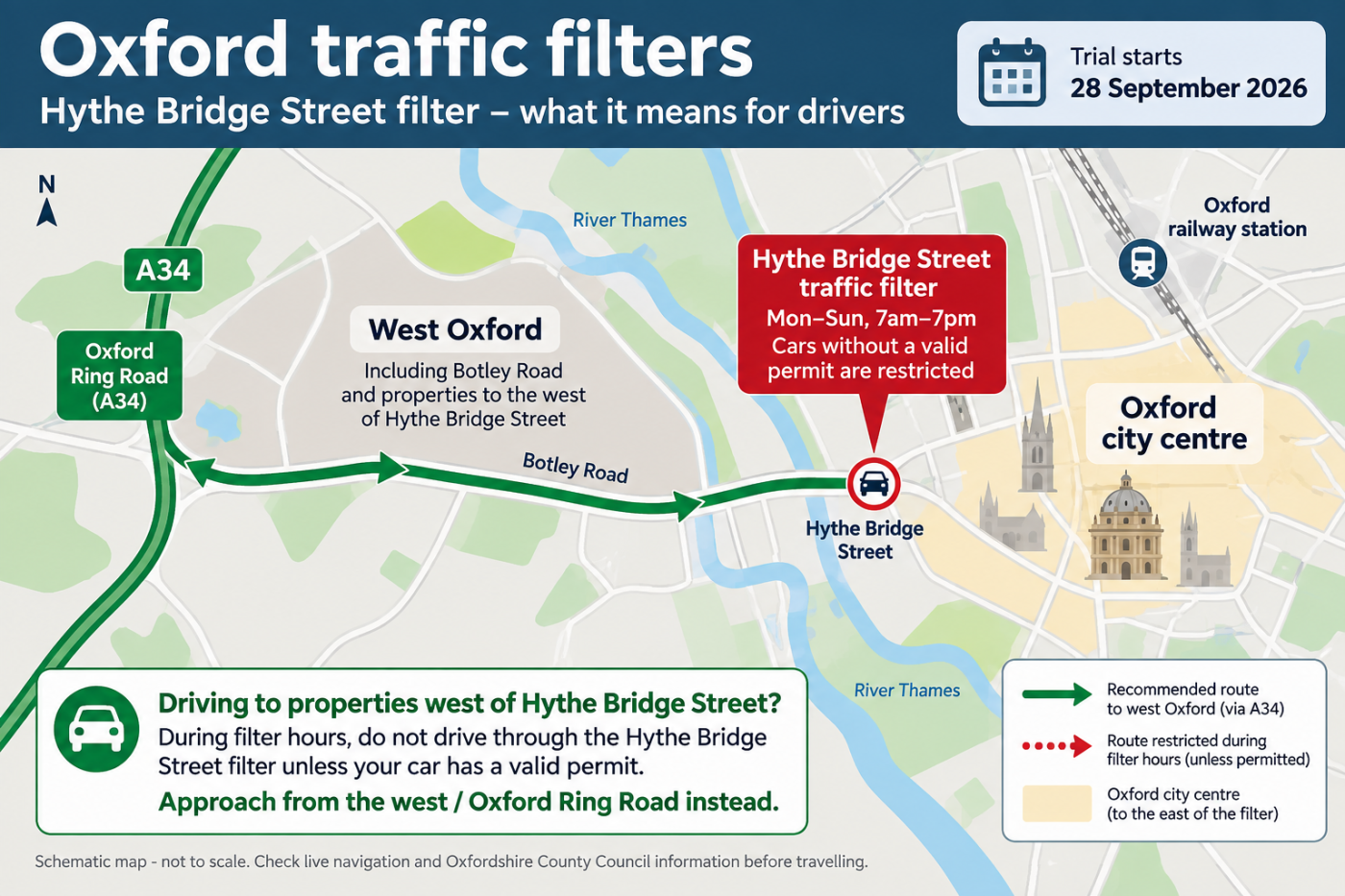
If you are driving to one of our Oxford properties, there is an important change to be aware of from 28 September 2026, when Oxford’s traffic filter trial begins.
The traffic filters are designed to reduce traffic travelling through parts of central Oxford. They do not prevent you from driving to your accommodation, but depending on where you are staying, you may need to approach the property by a different route.
Hythe Bridge Street – particularly important for West Oxford
The Hythe Bridge Street traffic filter is particularly relevant if you are staying in West Oxford, including properties around Botley Road and Osney.
The filter operates every day from 7am to 7pm. During these hours, cars cannot pass through the filter unless they have an appropriate permit. The restriction applies to the filter point itself rather than closing the whole road.
This means that if your accommodation is west of the Hythe Bridge Street filter, you should not assume that you can drive directly from Oxford city centre through Hythe Bridge Street to reach it.
Instead, if you are travelling by car without a permit, plan your route via the Oxford Ring Road/A34 and approach West Oxford from the west. Botley Road is open, so properties in this part of Oxford remain accessible by car – you simply need to use the appropriate route.
What is a traffic filter?
A traffic filter is not a physical barrier or road closure. It is a short section of road monitored by automatic number plate recognition (ANPR) cameras.
During the operating hours, cars without a valid permit cannot drive through the filter. Other types of vehicle, including vans, buses, motorbikes and lorries, are not subject to the car restriction. Electric cars are not automatically exempt.
There are six traffic filter locations across Oxford. Hythe Bridge Street, Thames Street, St Cross Road and St Clement’s Street operate 7am–7pm, seven days a week, while Hollow Way and Marston Ferry Road initially operate at peak times Monday to Saturday.
Driving to your Short Let Space property
The important thing to remember is that all parts of Oxford remain accessible by car without driving through a traffic filter. The filters may change the route you need to take, rather than preventing access to your destination.
If you are staying in one of our properties, we recommend:
- checking your route before travelling, particularly if you are driving to West Oxford
- using live navigation such as Google Maps or Apple Maps
- paying attention to traffic-filter warning signs as you approach central Oxford
- checking the official Oxfordshire County Council map if you are unsure whether your route crosses a filter.
View the official interactive Oxford traffic filter map:
https://experience.arcgis.com/experience/313de5304ff647fdb95773ffc33e88ed
Traffic arrangements can change, so we recommend checking the official map and your live navigation shortly before travelling.


